Tracing Atmospheric Influences on Decision Timelines in Regulated Multi-Table Poker Environments
Logan Bauer · Jul 15, 2026

Tracing Atmospheric Influences on Decision Timelines in Regulated Multi-Table Poker Environments
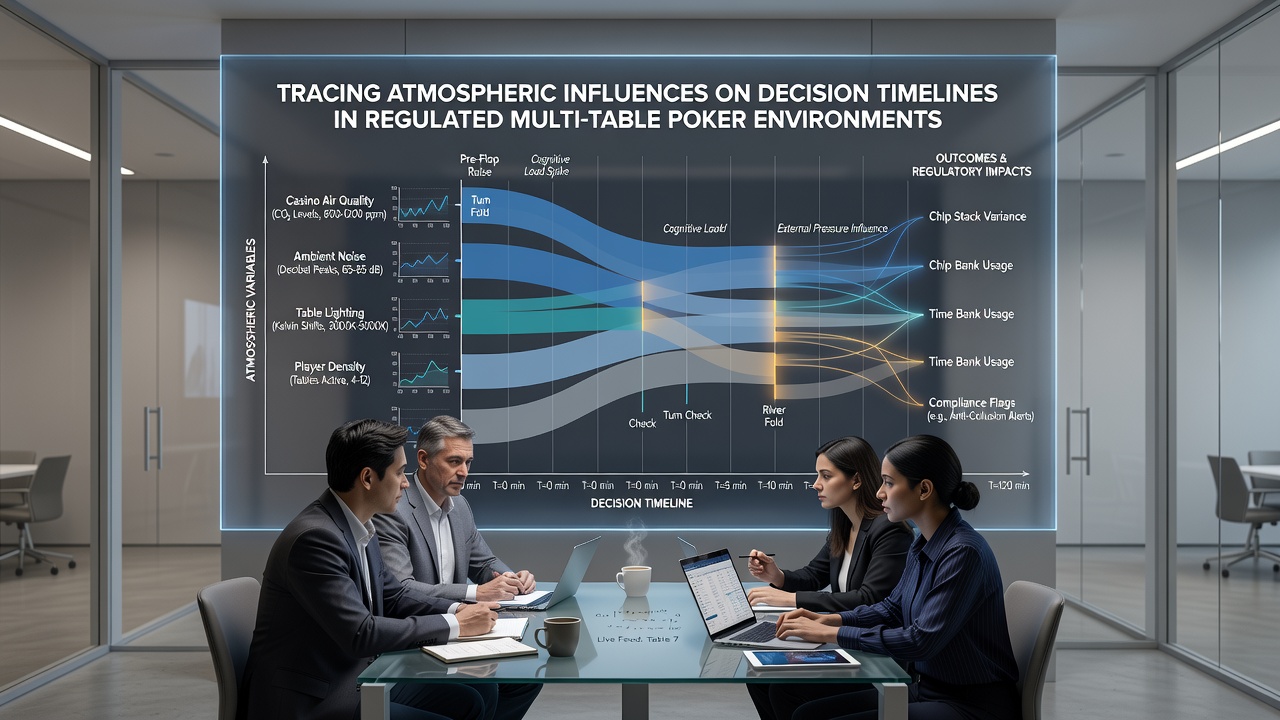
Atmospheric conditions shape the pace at which players reach decisions across regulated multi-table poker operations, where temperature gradients, barometric pressure shifts, and humidity levels interact with cognitive processing speeds. Observers note that facilities in desert climates often record shorter average decision intervals during cooler evening hours, while coastal venues show extended timelines when afternoon humidity rises above typical thresholds. Data collected from multiple jurisdictions indicates these patterns hold steady across both live and hybrid online setups that incorporate physical room monitoring.
Environmental Variables and Cognitive Response
Researchers have tracked how barometric pressure changes alter reaction windows in multi-table formats, where participants manage simultaneous hands under time constraints enforced by regulatory standards. A drop in pressure often coincides with slower deliberation sequences, particularly when players evaluate river decisions that involve larger pot commitments. Studies from North American sites reveal that pressure fluctuations of more than 0.3 inches of mercury correlate with measurable extensions in average action times, reaching up to 12 seconds longer per decision in controlled comparisons.
Temperature plays an equally direct role. Venues maintaining 68 to 72 degrees Fahrenheit typically document tighter decision timelines than those operating above 76 degrees, where physiological responses such as increased heart rate and mild dehydration appear more frequently. In July 2026, several Nevada properties adjusted HVAC protocols following internal audits that linked sustained higher room temperatures to extended betting cycles during peak summer hours.
Regulatory Frameworks and Monitoring Requirements
Regulated environments require operators to maintain environmental logs alongside standard gameplay records. The Nevada Gaming Control Board stipulates that multi-table areas must record ambient conditions at regular intervals when electronic decision-timing systems operate. These logs allow regulators to cross-reference atmospheric data with player action timestamps during compliance reviews. Similar provisions appear in guidelines issued by the Alcohol and Gaming Commission of Ontario, which emphasize consistent climate control across licensed poker rooms that support multi-table play.
Operators integrate these measurements into broader risk-management systems. Software platforms flag decision sequences that deviate from established baselines, prompting floor staff to verify whether external factors such as sudden pressure changes or HVAC malfunctions contributed to the variation. This approach supports transparent audits without attributing outcomes solely to player skill or intent.
Data Patterns Across Jurisdictions
Comparative analysis of decision timelines shows regional differences tied to local climate norms. Facilities in arid zones report more consistent action speeds year-round once indoor humidity stabilizes, whereas operators in temperate regions observe greater variability during seasonal transitions. A 2025 report prepared by researchers at the University of Nevada, Reno examined over 180,000 hands across three properties and identified a 7 percent increase in average decision duration when outdoor temperatures exceeded 95 degrees Fahrenheit for consecutive days.
Multi-table environments amplify these effects because players must allocate attention across simultaneous boards. When atmospheric conditions shift, the added cognitive load can extend processing times on marginal hands more noticeably than in single-table formats. Regulators in multiple states now encourage operators to include environmental metrics in their annual operational reports to help identify recurring patterns that affect game pace and player experience.
Integration with Technology and Compliance
Modern poker platforms combine atmospheric sensors with timing software to create comprehensive datasets. These systems timestamp each action while logging temperature, humidity, and pressure readings from fixed locations within the gaming area. The resulting records assist both operators and oversight bodies in distinguishing between normal variation and anomalies that might warrant further review. In practice, this integration has allowed several properties to adjust lighting and airflow schedules in response to observed spikes in decision duration during specific weather events.
Training programs for dealers and floor supervisors now incorporate modules on recognizing environmental influences. Staff learn to monitor visible indicators such as player hydration levels or room occupancy density alongside the quantitative data streams. This layered approach ensures that regulatory standards for game integrity remain intact even as external conditions fluctuate.
Conclusion
Atmospheric monitoring has become a standard component of operational oversight in regulated multi-table poker settings. Data gathered across multiple jurisdictions demonstrates consistent relationships between environmental variables and decision timelines, prompting operators to refine climate controls and record-keeping practices. Regulatory bodies continue to refine requirements around these measurements, ensuring that both live and hybrid formats maintain documented standards for game pace and fairness. As facilities collect additional longitudinal records, the connections between atmospheric conditions and player behavior grow clearer, supporting more precise management of multi-table environments.