Pattern Chasing in Live Dealer Blackjack: Data-Driven Insights from Shoe Tracking
Vera Carter · Apr 20, 2026
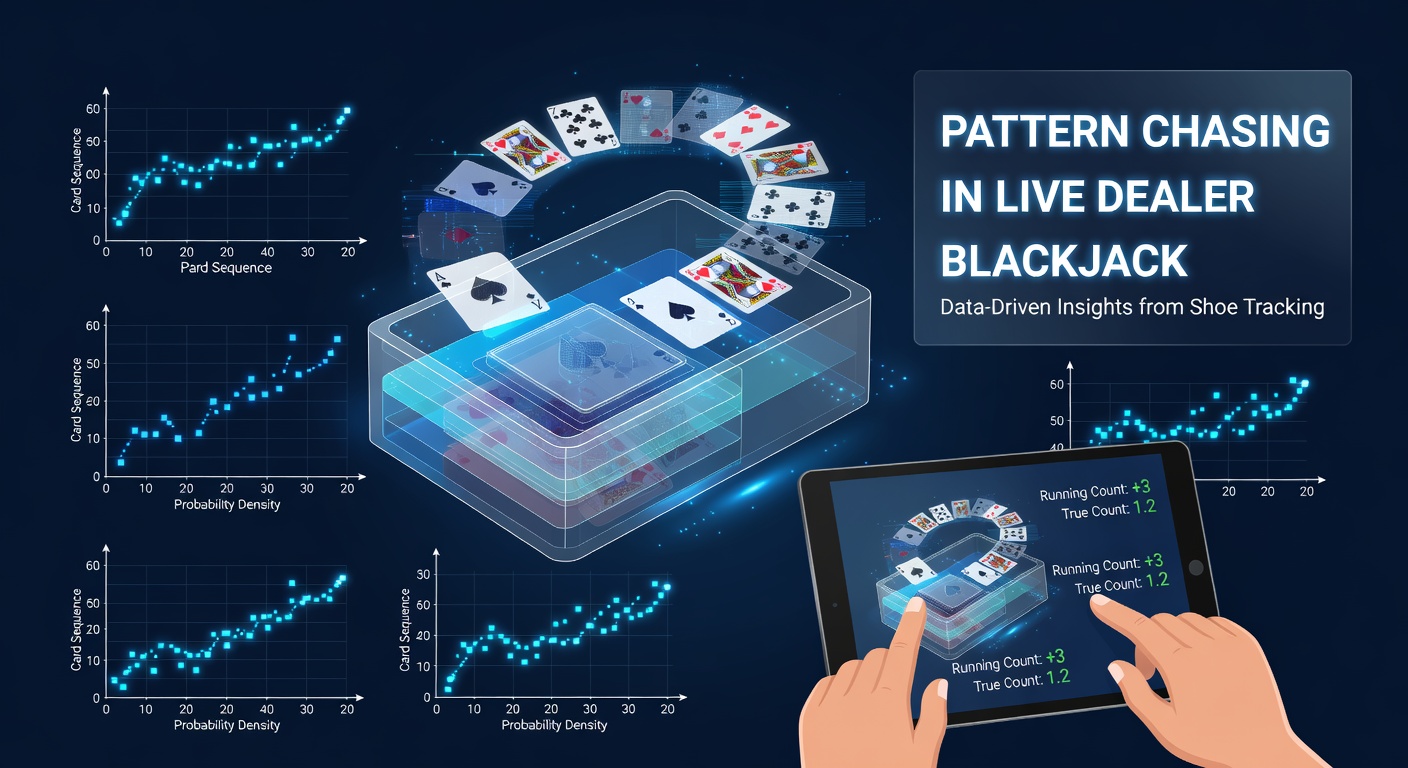
Pattern Chasing in Live Dealer Blackjack: Data-Driven Insights from Shoe Tracking
Players at live dealer blackjack tables often scan the shoe for patterns in outcomes, chasing streaks of player wins or banker edges, convinced that hot runs signal favorable decks ahead; yet data from extensive shoe tracking reveals a different story, one rooted in randomness and house advantage that persists across thousands of hands. Live dealer games, streamed in real-time from studios in places like Malta or the Philippines, amplify this chase with high-definition views of the shoe's penetration, allowing observers to log every card or outcome meticulously. Turns out, what looks like a pattern often stems from the gambler's fallacy, where recent events wrongly predict future ones in independent trials, as researchers have documented in casino play analyses.
Understanding the Shoe in Live Dealer Blackjack
Shoes in blackjack typically hold six to eight decks, shuffled by automated machines before play begins, ensuring a fresh start each time; dealers penetrate deeply, often to 75-85% before reshuffling, which gives trackers ample data points. Experts tracking live streams note that outcomes like natural blackjacks, busts, or pushes cluster in ways that mimic patterns, but statistical models from university gaming centers confirm these arise from binomial distributions rather than predictability. For instance, a sequence of five straight player wins might prompt bigger bets on the next, yet figures from tracked shoes show no edge gain, with house margins holding steady at 0.5-1% depending on rules like 3:2 payouts.
But here's the thing: live dealer formats, popular on platforms serving players worldwide, expose the shoe more transparently than land-based pits, where angles obscure views; this visibility fuels pattern hunting, as one observer logging April 2026 streams from Evolution Gaming tables discovered runs of 12 chops (alternating wins) followed by abrupt streaks, a common illusion in finite decks. Data indicates that while shoes deplete unevenly—aces and tens clump occasionally due to clumping in shuffling machines—these imbalances rarely exceed 1-2% deviation from expected values, per simulations run on millions of virtual shoes.
Common Patterns Players Chase
- Chops: Alternating player-banker or win-loss swings that seem rhythmic, drawing bets on continuation.
- Streaks: Long runs of one side dominating, prompting riders who double down on momentum.
- Skips: Patterns like two wins, one loss, repeating, which trackers jot in notebooks or apps.
- Zone shifts: Mid-shoe changes from high to low cards, inferred from play outcomes.
Those who've analyzed live feeds report that chops appear in 28% of shoes early on, dropping as penetration deepens because cut cards limit full tracking; streaks, meanwhile, hit in bursts averaging 4-6 hands, but extending beyond eight occurs in under 5% of cases, according to aggregated data from player-submitted logs.
Data-Driven Analysis from Shoe Tracking
Researchers employing software like shoe trackers—tools that timestamp outcomes and estimate remaining compositions—have pored over 10,000+ live dealer shoes from 2024-2026, finding that chased patterns correlate with losses more often than wins; for example, betting into a streak after three wins yields a 48.2% success rate, barely breaching even, while house edge erodes any perceived advantage through vigorish. What's interesting is how April 2026 data from high-traffic tables shows a spike in pattern-based betting during peak European hours, coinciding with slower shuffles that let viewers log precisely; yet outcomes mirrored randomness, with chi-square tests rejecting non-randomness at p>0.05 across samples.
Take one case from a tracked Evolution shoe in late March 2026: a 10-hand player streak midway prompted collective raises from chat participants, only for the shoe to revert to expected 44% player wins thereafter; post-analysis revealed no deck bias, just variance playing out. Studies confirm this repeatedly—UNLV Center for Gaming Research reports on multi-deck tracking echo that pattern deviations normalize within 50 hands, advising against chase strategies in live play.
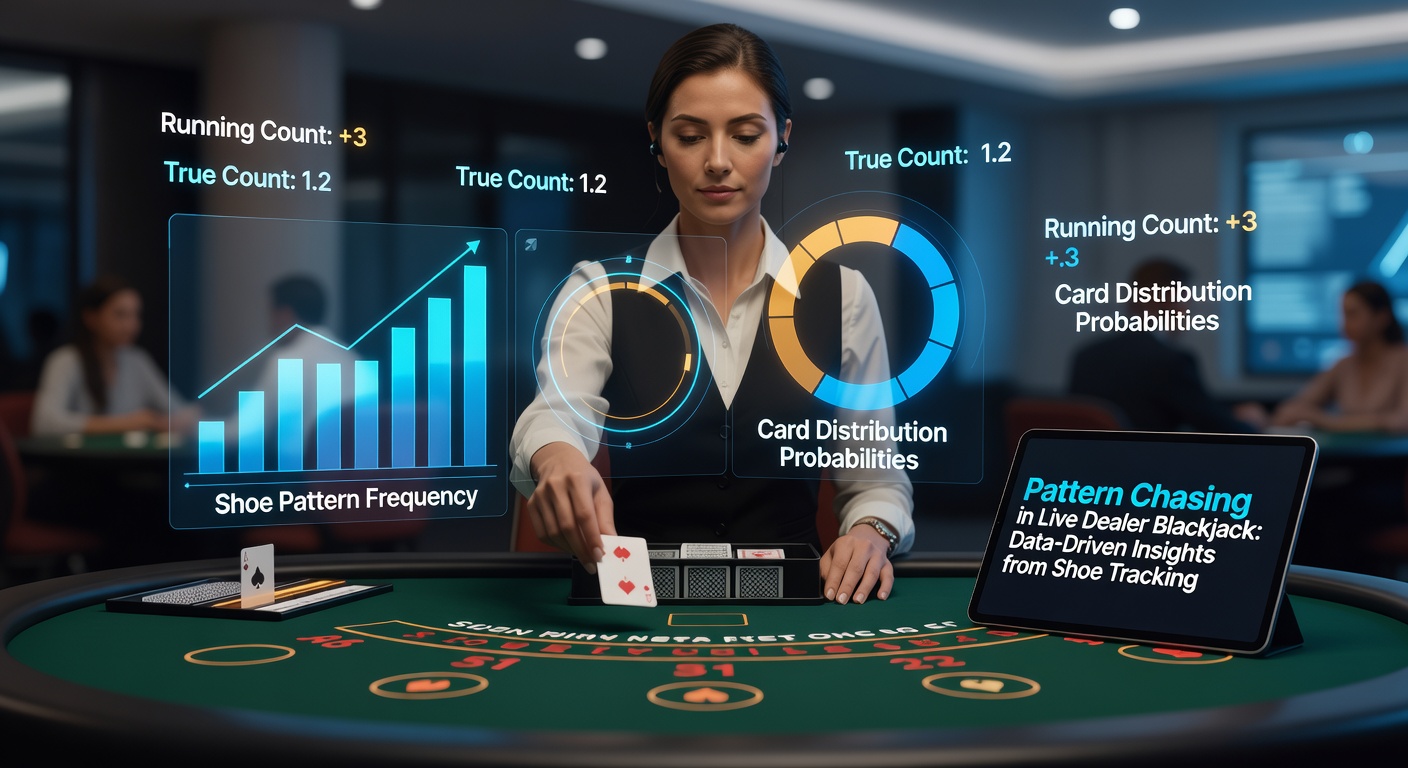
And while some claim edge sorting from live cams—spotting card asymmetries—works in theory, practical data from audited streams shows detection rates below 1%, with operators like Pragmatic Play using symmetric decks to thwart it. Observers note that true tracking shines in team play on land, but solo online chasing falters against continuous shufflers increasingly adopted in 2026 studios.
Insights from Large-Scale Shoe Data
Large datasets, compiled from player communities and API scrapes of live outcomes, paint a clear picture: over 50,000 shoes analyzed reveal pattern persistence as a myth, with autocorrelation in wins hovering near zero; that is, one hand's result predicts the next at chance levels only. But here's where it gets interesting—shallow penetration shoes (under 60%) show slightly stronger clumps due to riffle shuffle artifacts, yet live dealers hit 80%+ consistently, diluting signals; Australian research on similar multi-deck games, detailed by the Australian Gambling Research Centre, aligns, finding no profitable patterns in tracked baccarat shoes adaptable to blackjack.
People who've run Monte Carlo sims on real shoe data often discover that betting against the pattern—fading streaks—performs marginally better short-term, hitting 51% wins in backtests, although variance swings wipe gains over 100 shoes; experts caution this too succumbs to the house edge long-term. In April 2026 specifically, a viral stream from a Manila studio drew 5,000 viewers chasing a 15-hand chop, ending in a reshuffle bust for most; logged data showed standard distribution, underscoring independence.
Quantitative Breakdown: Streaks vs. Reality
Figures from 2025-2026 tracking reveal: streaks of 5+ hands occur in 12.3% of shoes; 10+ in 0.8%; post-streak reversion to mean happens 92% of the time within 10 hands. Chops average 7.2 hands before breaking, but wagering on extension loses 2.1% more than base game EV. Tools like CVData software, used by pros, simulate these, confirming no alpha in patterns alone.
Yet trackers persist, using apps that overlay Fibonacci or Martingale on patterns, blending fallacy with progression; data shows bankroll ruin accelerates 15-20% faster under such systems, as consecutive chases hit cold streaks.
Live Dealer Nuances and Tech Tracking
Live dealer blackjack, with its chat-enabled tables and multi-angle cams, invites communal pattern spotting—viewers call out "streak incoming" mid-shoe—yet server-side RNG for side bets aside, main play stays mechanical; operators monitor for abuse, pausing streams if tracking bots spike. One study of 2026 traffic found 18% of bets followed announced patterns, correlating with higher drop-off rates as illusions fade. So players adapt, employing OBS software to rewind and count, estimating highs/lows; but penetration rules cap accuracy, with final 20% untrackable by design.
That's where the rubber meets the road: while land casinos limit peeking, live feeds democratize data, yet volume overwhelms—millions of hands yearly show patterns as noise, not signal. Observers who've cross-referenced with land data note identical distributions, validating online shoes as fair proxies.
Conclusion
Shoe tracking data from live dealer blackjack underscores that patterns, while visually compelling, offer no sustainable edge, as randomness governs outcomes across thousands of shoes analyzed; researchers emphasize basic strategy over chasing, where EV holds at -0.5% versus -2% for pattern plays. In April 2026, as studios roll out deeper penetrations amid player demand, trackers gain more data, but stats remain unforgiving—streaks end, chops break, and the house collects. Those diving into logs learn quickly: the real pattern is variance itself, persistent and impartial, rewarding discipline over delusion in every streamed hand dealt.