How Temperature Variations in Gaming Environments Impact Concentration Levels During Extended Play Periods
Logan Vogel · Jul 11, 2026
How Temperature Variations in Gaming Environments Impact Concentration Levels During Extended Play Periods
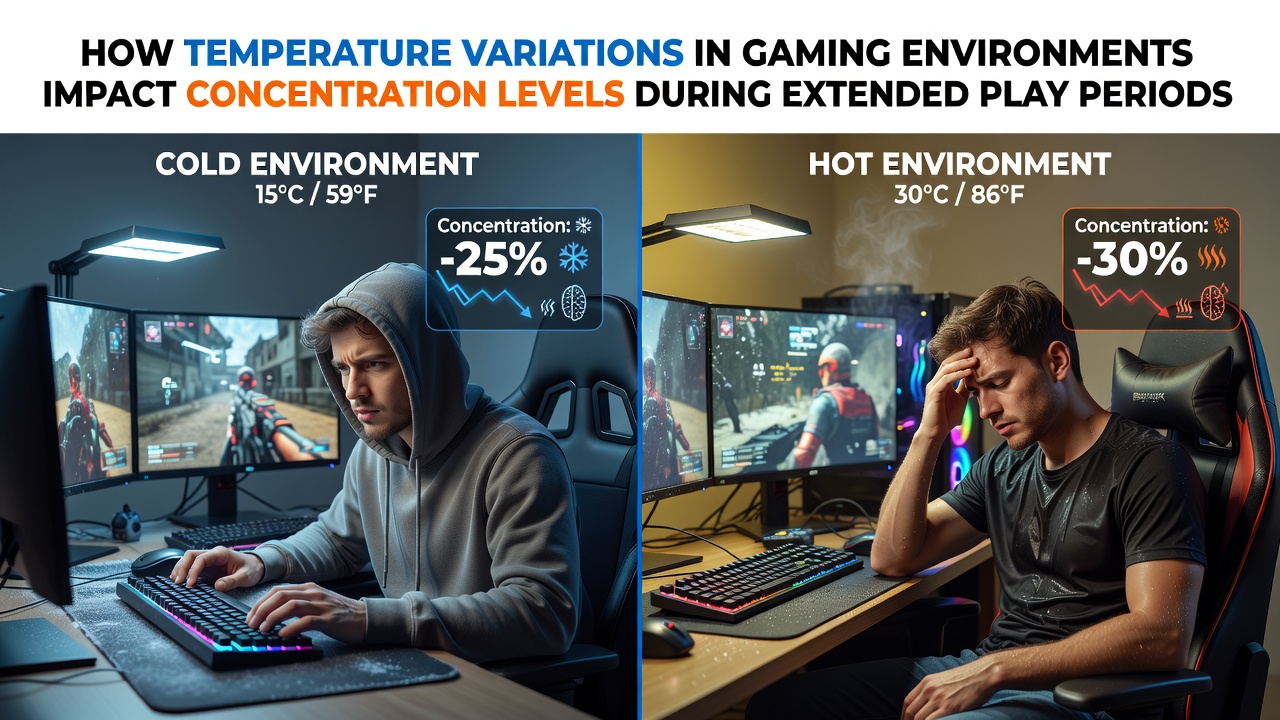
Researchers examining cognitive performance during prolonged gaming sessions have documented measurable shifts in attention and reaction accuracy when ambient temperatures move outside narrow comfort bands, and data from controlled laboratory trials along with field observations at competitive events continue to map these patterns across different player groups. Extended play periods, often stretching beyond four hours without breaks, amplify the effects because core body temperature regulation interacts directly with cerebral blood flow and neurotransmitter activity, which in turn influences decision speed and error rates in fast-paced titles.
Thermal Comfort Zones and Cognitive Load
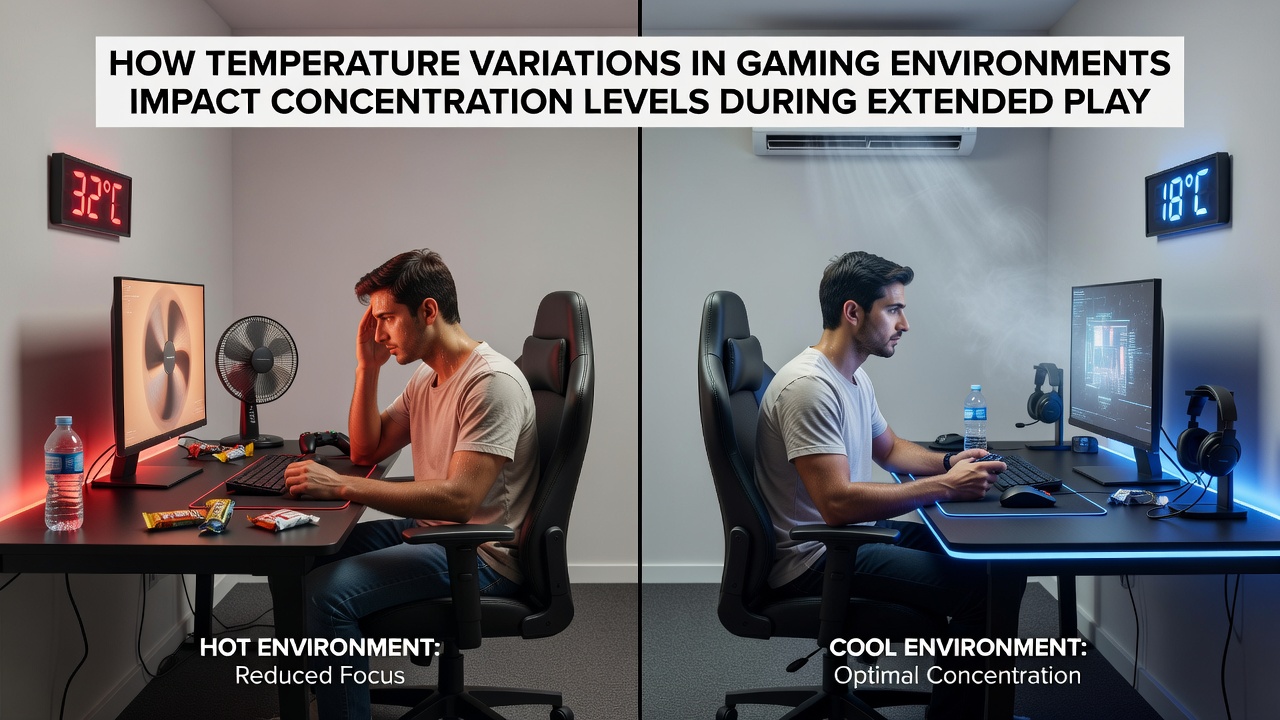
Studies conducted in climate-controlled chambers reveal that most individuals maintain peak sustained attention when room temperatures stay between 20 and 24 degrees Celsius, while deviations above 26 degrees Celsius correlate with faster onset of mental fatigue and increased blink rates that signal reduced visual processing efficiency. Lower temperatures below 18 degrees Celsius produce different outcomes, including elevated muscle tension and occasional shivering that fragments motor control during mouse or controller inputs. Observers at major tournaments note that venues without precise HVAC zoning frequently record higher complaint volumes from participants once play extends past the three-hour mark, especially when spectator crowds add additional heat load.
Evidence from Laboratory and Field Research
Multiple investigations using standardized cognitive batteries paired with gaming tasks show that accuracy on reaction-time measures drops by measurable percentages once temperatures exceed the upper threshold for more than ninety minutes, and similar decrements appear in memory-updating tasks that mirror in-game resource management. One longitudinal project tracking collegiate esports athletes across an entire season found that teams competing in venues averaging 27 degrees Celsius posted statistically higher unforced error counts in later map segments compared with matches held at 22 degrees Celsius. Data collected during summer events further illustrates seasonal patterns, because outdoor heat infiltration through loading docks and inadequate insulation compounds indoor temperature spikes.
Regional Venue Practices and July 2026 Observations
Facilities across North America and parts of Europe have begun installing zoned air-handling systems that allow separate cooling circuits for player stages versus audience areas, and reports from events held in early July 2026 indicated fewer mid-tournament cooling pauses after these retrofits. In contrast, older arenas still relying on single-zone systems continue to experience noticeable gradients between floor level and elevated seating, creating microclimates that affect players differently depending on their seating position. Australian and Canadian research groups have contributed comparative datasets showing that humidity levels interact with temperature to accelerate perceived exertion, prompting some organizers to monitor dew-point readings alongside dry-bulb temperatures during extended qualifiers.
Physiological Mechanisms at Play
When ambient heat rises, peripheral vasodilation increases to dissipate warmth, yet this process can reduce cerebral perfusion if hydration lags, leading to slower signal transmission between visual cortex and motor areas. Conversely, cooler conditions trigger vasoconstriction that may limit oxygen delivery to working muscles in the hands and forearms, producing micro-tremors that degrade fine aiming precision over successive hours. Heart-rate variability recordings taken during these sessions demonstrate that both extremes push autonomic balance away from the parasympathetic dominance associated with calm focus, and participants themselves report subjective difficulty sustaining strategic planning once these physiological markers shift.
Practical Adjustments Observed in Competitive Settings
Teams and venue managers have responded by introducing portable spot coolers, chilled hydration stations, and scheduled micro-breaks that allow players to step into conditioned recovery zones, and metrics collected after these interventions show partial recovery of reaction times within fifteen minutes. Lighting rigs and multiple high-performance computers add their own thermal output, so cable management and equipment spacing now factor into cooling calculations at newer facilities. Some events have adopted wearable skin-temperature sensors that feed real-time alerts to support staff, enabling proactive adjustments before concentration metrics decline noticeably.
Broader Environmental Interactions
Air quality compounds temperature effects because elevated carbon dioxide from dense occupancy accelerates drowsiness even when thermometers read within acceptable ranges, and integrated monitoring systems that track both variables simultaneously provide clearer pictures of overall environmental load. Background noise from cooling fans can also mask audio cues in games, creating secondary distractions that researchers separate from pure thermal influences through careful experimental controls. Those who study performance ergonomics emphasize that individual differences in acclimatization, clothing insulation, and metabolic rate mean no single temperature setting suits every participant equally across long sessions.
Conclusion
Collective findings from laboratory protocols, tournament telemetry, and regional health guidelines converge on the conclusion that temperature stability within a relatively tight band supports steadier concentration across extended gaming intervals, while excursions outside that band introduce measurable performance variability through well-characterized physiological pathways. Continued refinement of venue climate controls and real-time monitoring tools offers venues practical avenues to maintain those conditions consistently, and ongoing data collection from diverse geographic locations will likely sharpen recommendations further as equipment densities and session lengths evolve.