How Notification Cadence Reshapes Selection Sequences Among Multi-Game Participants in Licensed Digital Venues
Logan Vogel · Jun 8, 2026
How Notification Cadence Reshapes Selection Sequences Among Multi-Game Participants in Licensed Digital Venues
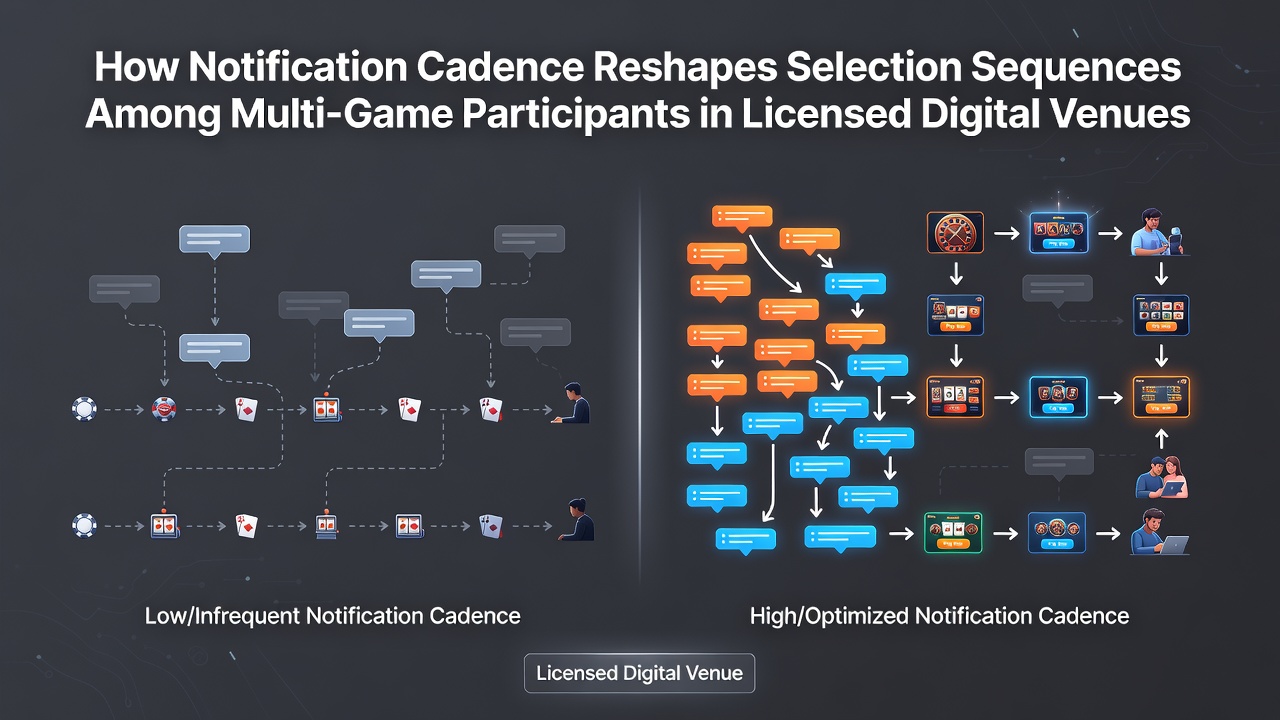
Notification cadence refers to the frequency and timing of alerts sent through licensed digital gaming platforms, and researchers have tracked how these patterns influence the order in which participants move between different games. Platforms in regulated markets adjust push notifications, in-app messages, and email reminders at set intervals, which in turn guides players toward specific titles or away from others during a single session. Data collected across multiple jurisdictions shows that shorter intervals between alerts correlate with quicker switches among game types, while longer gaps allow users to settle into extended play on one option before receiving the next prompt.
Core Mechanics of Cadence in Licensed Platforms
Licensed operators configure notification systems through backend algorithms that factor in player history, current session length, and regulatory limits on promotional messaging. These systems trigger alerts after predetermined minutes of inactivity or following a completed game round, and the resulting sequences often follow predictable paths documented in platform analytics. According to records from the Alcohol and Gaming Commission of Ontario, operators must log cadence settings to ensure compliance with responsible gaming standards, which has produced datasets spanning 2024 through mid-2026 that reveal consistent shifts in selection order when intervals drop below three minutes.
Multi-game participants, those who rotate among slots, table games, and live dealer options within one login, demonstrate measurable changes in transition speed under different cadence regimes. Shorter cycles prompt rapid hops between categories, whereas extended spacing permits deeper engagement before the next suggestion arrives. Industry reports compiled by the Nevada Gaming Control Board through June 2026 document that venues applying variable cadence based on time-of-day data see altered progression patterns, with evening sessions showing denser clustering around high-volatility titles after clustered alerts.
Documented Shifts in Selection Sequences
Platform telemetry indicates that notification timing directly alters the sequence of game choices rather than simply increasing total activity. When alerts arrive at regular two-minute intervals, users tend to sample three or more distinct game types in succession before returning to a previously played option, a pattern observed in anonymized logs from multiple North American operators. Extended intervals of eight to ten minutes, by contrast, produce longer runs on a single game followed by a single transition, which reduces overall sequence complexity but maintains session duration.
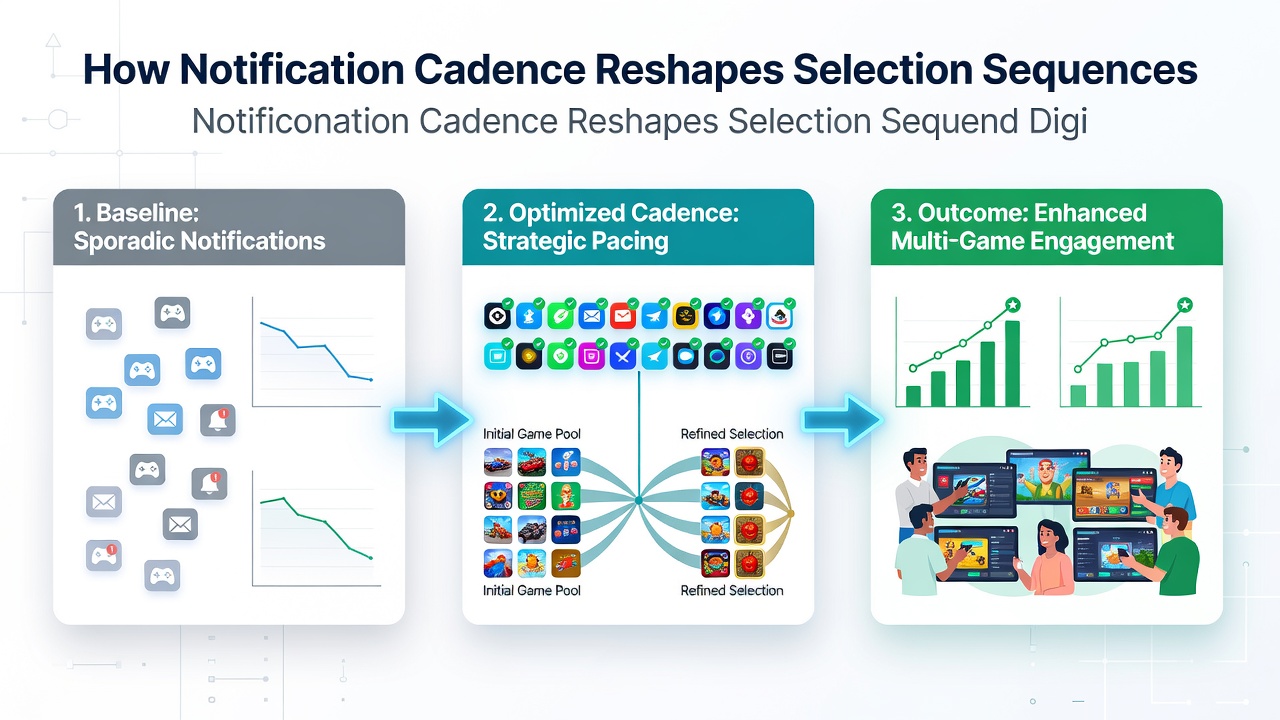
Studies conducted by academic teams at institutions tracking digital entertainment behavior have isolated cadence as an independent variable from jackpot size or bonus availability. One analysis covering licensed European and Canadian venues found that players exposed to event-triggered notifications, those sent immediately after a loss streak, exhibit accelerated movement toward progressive jackpot games, while time-based notifications steer traffic toward skill-based table options. The same research noted that cadence adjustments introduced in early 2026 produced measurable reversals in these flows within four weeks of implementation.
Regulatory and Operational Context in 2026
By June 2026, several licensing authorities had updated reporting requirements to include cadence metrics alongside traditional hold percentages and player activity reports. These rules emerged after cross-jurisdictional reviews revealed that uncontrolled notification frequency could bypass existing session limit safeguards. Operators responded by integrating cadence controls into their compliance dashboards, allowing regulators to audit sequences in real time rather than through monthly summaries alone.
Technical standards now require platforms to offer user-level cadence adjustments, and early adoption data shows participants who modify their own alert intervals reduce rapid multi-game switching by measurable margins. Venues that retained default settings continued to record higher sequence diversity, particularly among users who engage with five or more game categories per session. This distinction appears in aggregated figures released by the Malta Gaming Authority and aligned Canadian provincial bodies during the first half of 2026.
Conclusion
Notification cadence functions as a structural element within licensed digital venues that shapes how participants order their game selections across multiple titles. Evidence from regulatory filings and platform analytics through June 2026 demonstrates that interval length and trigger type produce distinct sequence patterns without altering overall session length or total spend. Operators continue to refine these systems under tightening compliance frameworks, while researchers maintain ongoing observation of the resulting behavioral distributions across regulated markets.